
Nutrition+
DaBomb Nutrition Insight
Focusing on animal nutrition, biotechnology and industry trends,
Sharing fermentation technology applications, research perspectives, and new market insights.

- Home
- DaBomb Nutrition Insight
- DaBomb Nutrition Insight 2026 No.01
- Cover Story | Global Trends in Postbiotics
Cover Story | Global Trends in Postbiotics
BY CHEN CHI-CHEN | ILLUSTRATION BY WANG LING-HUI
In recent years, breakthrough advances in microbiome science and gut microbiota research have driven a fundamental paradigm shift in the fields of functional foods and biopharmaceuticals — from a conventional focus on live microorganism supplementation toward more precise and stable modulation of bioactive components. Within this evolving landscape, postbiotics have rapidly emerged as a focal point of innovation, attracting growing attention from the global biotechnology and nutritional medicine communities.
Against the backdrop of increasingly stringent international regulations restricting or phasing out the use of antibiotic growth promoters (AGPs) in animal feed, the livestock industry faces mounting pressure to develop effective strategies for controlling enteric infections while maintaining feed conversion efficiency. Postbiotics — characterized by the absence of viable microorganisms, retained bioactivity under the high-temperature conditions inherent to feed pelleting processes, and the elimination of concerns regarding the horizontal transfer of antimicrobial resistance genes (ARGs) to animals or the surrounding environment — have emerged as a gold-standard alternative to conventional antibiotic use in modern animal production.
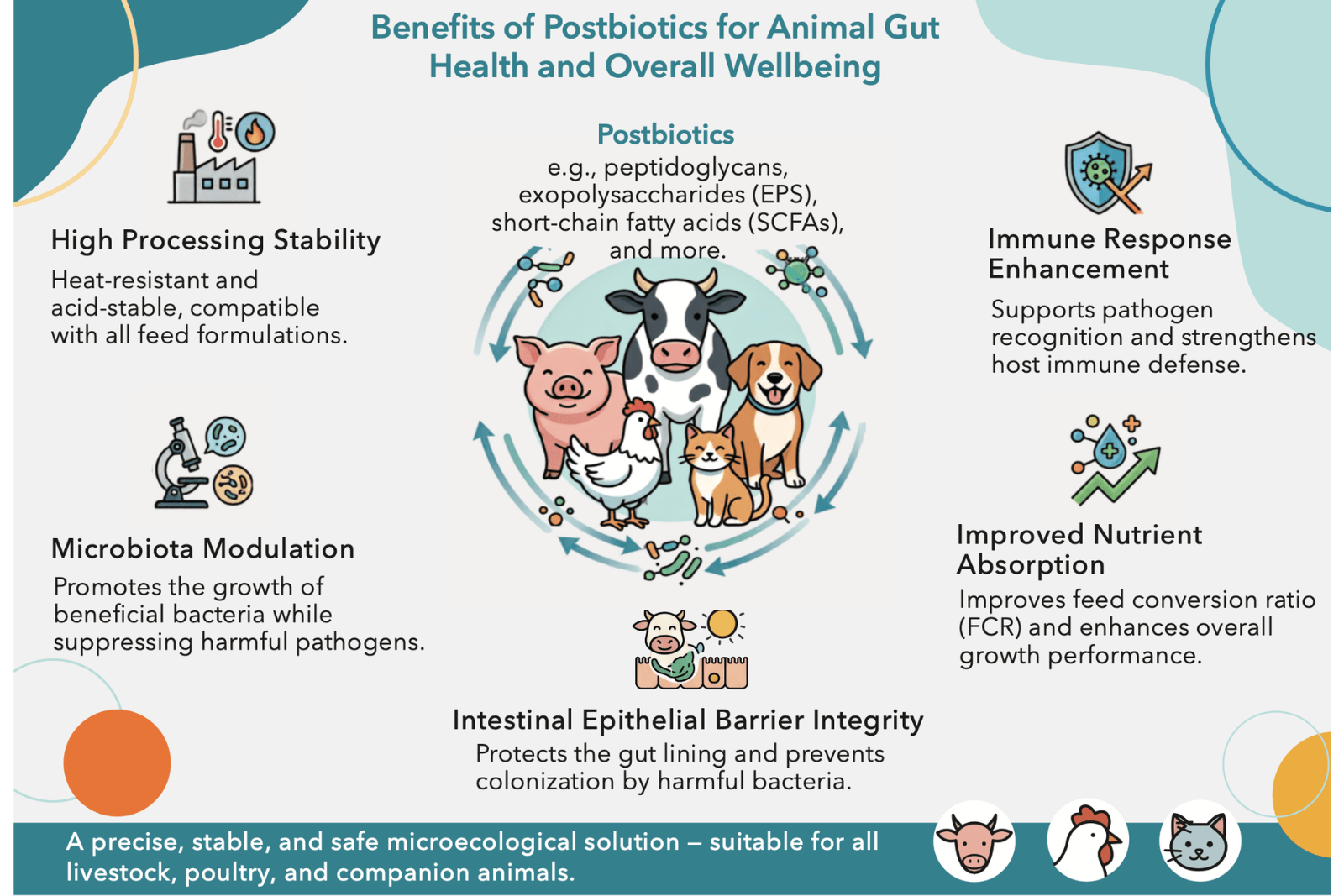
The emergence of postbiotics represents a fundamental paradigm shift in host microbiome modulation — transitioning from a "live-organism colonization model" to one of "precision biochemistry." Rather than depending on the physical viability and proliferation of living cells, postbiotics exert their biological effects through highly conserved microbial macromolecular structures — including peptidoglycans, lipoteichoic acids (LTAs), and exopolysaccharides (EPS) — alongside the complex metabolites generated through fermentation. These bioactive components engage in precision molecular-level crosstalk with the host epithelial barrier and innate immune receptors, including Toll-like receptors (TLRs)¹, NOD-like receptors (NLRs)², and G protein-coupled receptors (GPCRs)³.
From an industrial application standpoint, postbiotics elegantly resolve the critical technical bottlenecks that have long constrained conventional probiotics — namely, thermal inactivation, acid degradation, enzymatic hydrolysis, and limited shelf life — fundamentally removing the formulation barriers that have historically restricted the application of functional feed and food products.
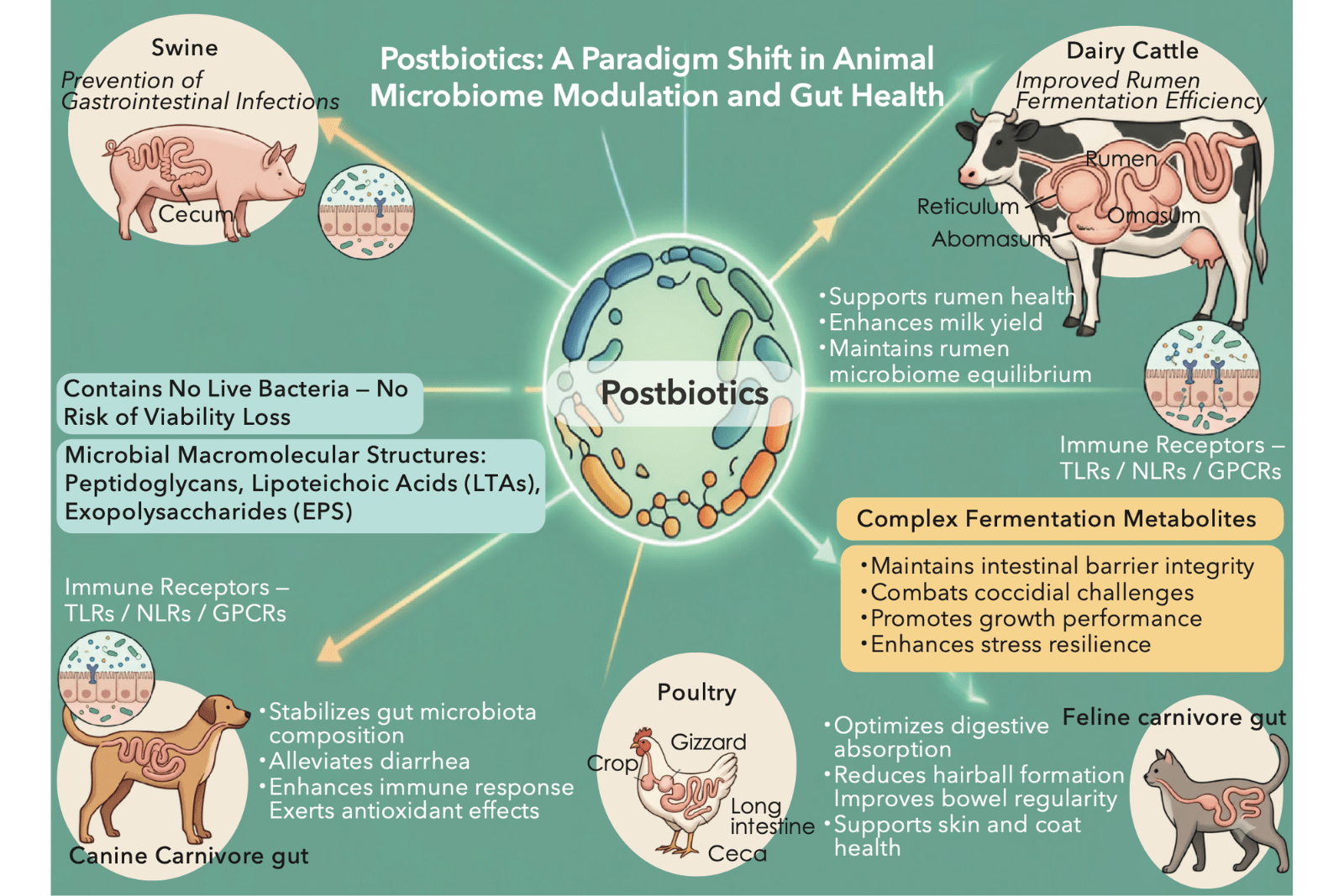
¹ TLRs (Toll-like Receptors): TLRs are critical protein sensors of the mammalian innate immune system. Located on the surface or within the interior of immune sentinel cells — such as macrophages and dendritic cells — TLRs are responsible for recognizing conserved molecular structures unique to invading pathogens, including bacteria and viruses, thereby triggering downstream inflammatory and defensive immune responses.
² NLRs (Nucleotide-binding Oligomerization Domain-like Receptors): NLRs are a family of intracellular receptors primarily responsible for detecting invading pathogens or endogenous danger signals arising from cellular damage, initiating innate immune responses from within the cytoplasm.
³ GPCRs (G Protein-Coupled Receptors): GPCRs constitute the largest and most functionally diverse family of cell-surface membrane receptor proteins in the human body, playing a central role in transducing a wide range of extracellular signals into intracellular responses.