
DBT-100 PL
Poultry-specific dual-effect heat-resistant probiotic postbiotic growth promoter
Product Introduction
DBT-100 PL is a dual-effect heat-resistant probiotic and post-biotic feed additive developed DaBomb Protein Biotech Corp. specifically for broiler and poultry farming, combining two complementary functional ingredients:
- Bacillus subtilis BA309: An antibacterial strain optimized for the intestinal environment of poultry. It can colonize the intestines and effectively inhibit common poultry pathogens such as Clostridium perfringens (the main pathogen of necrotic enteritis) and Salmonella.
- Lactic acid bacteria postbiotic L022: It regulates the intestinal immune response and reduces inflammatory signals with metabolically active substances, helping the intestine maintain the integrity of the mucosal barrier and absorption function under the challenge of pathogens.
The synergistic mechanism of the two components enables DBT-100 PL to simultaneously enhance poultry gut health at two levels: "direct antibacterial action" and "immune regulation." This improves feed conversion ratio, reduces the risk of necrotic enteritis, decreases wet feces, and significantly lowers the Salmonella contamination rate in farms, balancing production efficiency and food safety. The product utilizes heat-resistant Bacillus technology, allowing it to withstand 120°C feed pelleting processes, ensuring the stable preservation of probiotic activity from the factory to the feed trough.
Core Product Advantages
Effectively protects against necrotizing enterocolitis and reduces intestinal lesions.
In the Clostridium infection challenge trial, the ileal necrosis lesion score of the DBT-100 PL group was significantly lower than that of the unprotected group and close to that of the healthy control group, indicating that the product has a clear intestinal protective effect against necrotizing enterocolitis.
Restores intestinal villi height and enhances nutrient absorption.
After infection with Clostridium difficile, the intestinal villi of chickens atrophied, resulting in a significant decrease in the absorption area. The height of the duodenal and jejunal villi in the DBT-100 PL experimental group was significantly higher than that in the unprotected group and was close to that of healthy chickens.
Reduced Salmonella isolation rate by 92% within two weeks.
Field trials at poultry farms showed that within two weeks of introducing DBT-100 PL, the Salmonella isolation rate in chicken flocks dropped significantly from approximately 46% to 3.3%, a decrease of 92%, and remained at a low level thereafter, providing substantial assurance for food safety management on poultry farms.
Improving feed conversion ratios can save $45–50 per metric ton of chicken.
Under normal feeding conditions, the addition of DBT-100 PL reduced the feed conversion ratio from 1.33 to 1.22; under Clostridium perfringens infection challenge, the feed conversion ratio in the PL group (1.59) was significantly better than that in the unprotected group (1.75). Based on a feed cost of $550 per metric ton, this translates to a saving of $45–50 per metric ton of chicken production.
Improve the problem of wet manure and enhance the quality of the chicken coop environment.
Post-natal L022 helps reduce intestinal inflammation, stabilize the intestinal flora, restore the characteristics of chicken droppings from watery and wet to normal formed droppings, improve the hygiene of the chicken house, and reduce the risk of foot lesions caused by damp abdominal pads.
Technical Principles | Mechanism of Dual-Effect Synergistic Effect
This diagram illustrates in a concise way how the two core components of DBT-100 SW work simultaneously in the gut environment. The blue rods represent the probiotic BA309, and the orange spheres represent pathogenic bacteria in the gut.
As can be seen from the configuration in the figure, BA309 is densely distributed in the intestinal environment, and it surrounds and inhibits the proliferation of pathogens through physical competition and secretion of antibacterial substances—this is a visual representation of the "competitive exclusion" mechanism of probiotics.
The description below the image indicates that the lactic acid bacteria postbiotic L022 reduces inflammation, representing the direction in which L022 metabolites regulate the immune response at the intestinal mucosa and circulatory system levels: while pathogens are controlled, L022 postbiotics further inhibit excessive inflammatory signals, preventing secondary damage to the intestines due to immune imbalance.
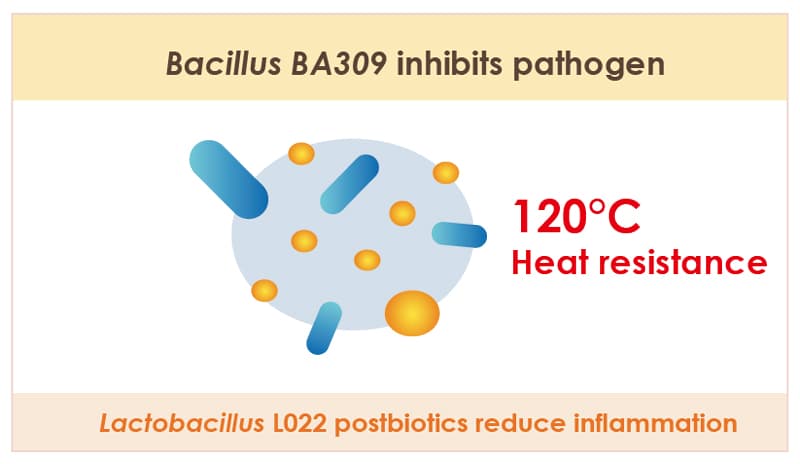
[Figure 1: Schematic diagram of the inhibitory effect of Bacillus subtilis BA309 on pathogens and the effect of metagenes in reducing inflammation]
The 120°C heat resistance indicated in the image reminds users that this dual-effect mechanism can be effectively delivered to the piglet's intestines only if the product maintains an effective number of live probiotics and postbiotic activity after the high-temperature pelleting process.
Research data and experimental results
Experiment 1 | Dual Validation of Improved Feed Conversion Rate under Normal and Infected Conditions
This chart, combined with the table on the right, presents the feed efficiency improvement results of DBT-100 PL in broiler production, further translating into quantifiable cost savings. The bar chart shows four experimental groups, with feed conversion ratio as the evaluation indicator (lower values are better, representing less feed required to grow one kilogram of chicken meat):
- Dark yellow column (general commercial feed, no additives): Feed conversion ratio = 1.33, day 21 of the experiment.
- Bright yellow bar (commercial feed + DBT-100 PL): Feed conversion ratio = 1.22, improvement of approximately 8.3%.
- Pink column (infected with Clostridium difficile, no supplementation): feed conversion ratio = 1.75. On day 35 of the experiment, infection significantly increased the feed conversion ratio.
- Dark pink column (infected with Clostridium difficile + DBT-100 PL): Feed conversion ratio = 1.59, significantly improved compared to the untreated group.

[Figure 2: Broiler Feed Conversion Rate Bar Chart (Including Clostridium difficile Infection Challenge) and Cost-Benefit Table]
Experiment 2 | Necrotizing Enteritis Protection Test: Dual Evidence from Lesion Scores and Intestinal Appearance
This chart consists of a score bar chart on the left and a comparison image of the intestinal appearance on the right, providing evidence of the protective effect of DBT-100 PL against necrotizing enterocolitis from both quantitative and visual perspectives.
The left image shows the ileal necrosis lesion score: Necrotizing enteritis is a serious intestinal disease in broiler chickens caused by Clostridium perfringens. It mainly affects the ileal mucosa, causing mucosal necrosis and sloughing, hemorrhage, and severe digestive and absorptive disorders, resulting in high mortality and rapid onset. This experiment uses the "ileal necrosis lesion score" as a quantitative indicator of infection severity; a higher score indicates more severe intestinal damage.
Experimental design: Group 3
- Control (+) group (healthy chickens, not infected, the two leftmost bars in the figure): lesion score 1.25 / 1.31 - this is the "ideal health baseline".
- Control group (−) (infected with Clostridium difficile, without DBT-100 PL, the two middle columns): lesion score 2.19 / 2.44 — the lesions were significantly aggravated after infection, representing the "unprotected state" of necrotizing enterocolitis.
- DBT-100 PL group (infection + addition of DBT-100 PL, the two rightmost columns): lesion score 1.43 / 1.38 - similar to the healthy control group (+), the statistical letter is "a", indicating no significant difference between the two groups; while the letter "b" is significantly different from the unprotected group (−), indicating that the protective effect of DBT-100 PL group is statistically significant.
The image on the right shows a comparison of intestinal appearance: The two intestinal segments provide a direct visual contrast. The left image shows the intestinal segment from the Clostridium perfringens infection group, where the intestinal wall is visibly congested and deep red, with signs of necrotic lesions in the mucosa; the right image shows the intestinal segment from the DBT-100 PL test group, where the intestinal wall is lighter in color, appears more normal, and shows significantly less mucosal damage. The difference between the two images reflects the actual state of intestinal health behind the scoring numbers.
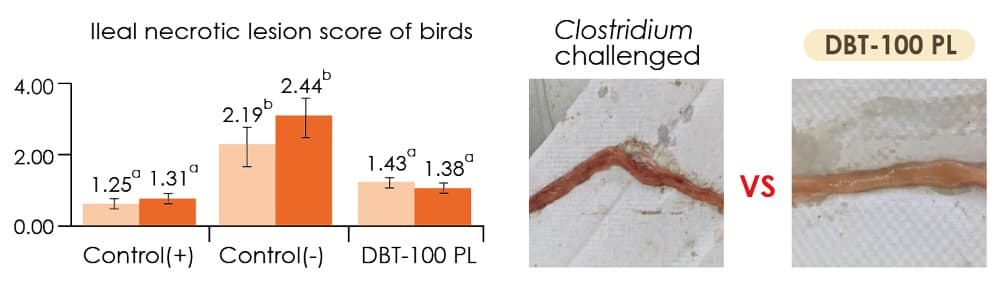
[Figure 3: Bar chart of ileal necrosis lesion scoring and comparison with intestinal appearance]
Experiment 3 | Intestinal villus height: Recovery of absorption capacity after infection and damage
Intestinal villi are tiny, finger-like projections densely covering the intestinal mucosa and are the main structures for nutrient absorption. The higher the villi, the larger the surface area available for absorption, and the higher the absorption efficiency of protein, energy, and trace elements in the feed. Clostridium infection damages the intestinal mucosa, significantly shortening villi height and resulting in a substantial reduction in the absorption area, which is one of the direct causes of the deterioration of feed conversion ratio after infection. This figure shows the villi height (unit: micrometers) measured in two intestinal segments of three groups of chickens: the duodenum (light orange column) and the jejunum (dark orange column).
- Control (+) group (healthy chickens): Duodenum 1264 micrometers, jejunum 1236 micrometers - the baseline for villus height in a healthy state.
- Control group (−) (infected, without DBT-100 PL): Duodenum 1007 μm, jejunum 954 μm — villus height decreased by approximately 20% after infection, and the absorption area was significantly reduced.
- DBT-100 PL group (infected + DBT-100 PL added): Duodenum 1168 micrometers, jejunum 1091 micrometers - villus height was significantly higher than that of the unprotected infected group, and the statistical letter (b) was the same as that of the healthy control (+) group, indicating that there was no statistically significant difference between the two groups. That is, DBT-100 PL basically restored the villus height after infection to a near-healthy state.
The significance of this result for poultry farming is that DBT-100 PL can not only suppress lesion scores (reduce damage) during infection, but also protect the structural integrity of intestinal villi (maintain absorption capacity). Both of these factors together explain why chickens supplemented with DBT-100 PL can still maintain a relatively good feed conversion ratio under infection challenge conditions.
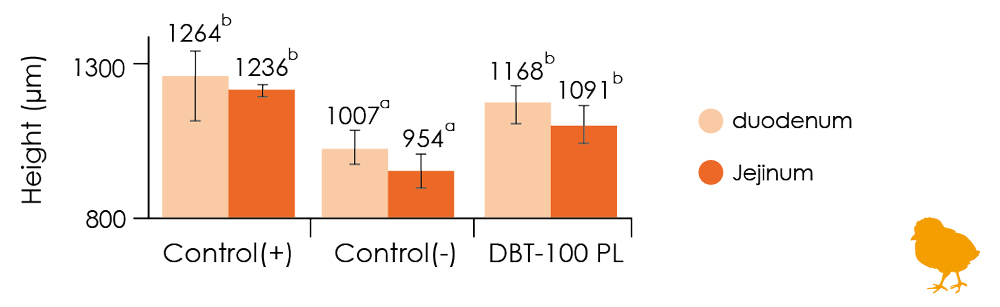
[Figure 4: Bar chart of villus height in the duodenum and jejunum of broiler chickens]
Experiment 4 | Salmonella isolation rate: decreased by 92% within two weeks
Salmonella is one of the pathogens most concerned by food safety regulations in poultry farming. It not only affects the health of chickens but is also a significant source of food safety incidents for consumers. Many export markets and slaughterhouses have strict upper limits on the Salmonella contamination rate of chickens supplied, making Salmonella management an unavoidable issue in modern poultry farming.
This chart presents the actual experimental results from a live farm (not a laboratory-induced infection). The vertical axis represents the Salmonella isolation rate (%), indicating the proportion of Salmonella that can be isolated from chicken samples; the horizontal axis represents the time points after the introduction of DBT-100 PL.
- Day 1 (before introduction): Salmonella isolation rate of approximately 46% - Salmonella can be isolated from nearly half of the samples, indicating a fairly high level of contamination.
- Week 2 after import: The separation rate dropped rapidly to 3.3%, a decrease of 92%.
- Weeks 3 and 4: The separation rate remained at a low level of 3.3% without any rebound.
The reduction from 46% to 3.3% within two weeks is a significant improvement visible under local conditions. Suppressing Salmonella is not just a health management issue; it also directly relates to whether farms can meet the purchasing standards of downstream slaughterhouses and the food safety reputation of their products in the market.
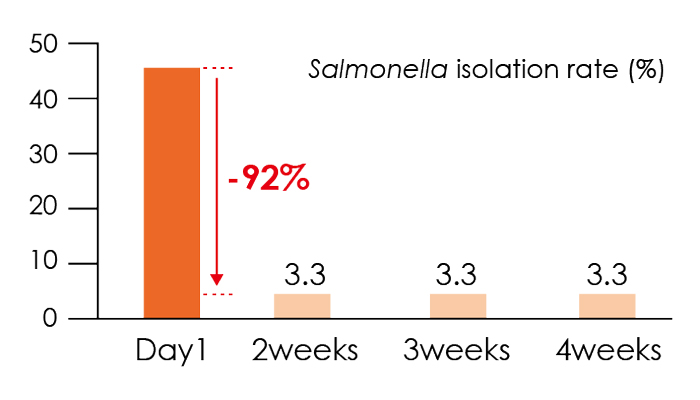
[Figure 5: Bar chart showing the time variation of Salmonella isolation rate in on-site breeding farms]
Experiment 5 | Improved Wet Stools: A Visual Indication of Gut Health
This set of comparison images shows the difference in fecal appearance between broiler chickens under Clostridium difficile infection challenge conditions, with and without DBT-100 PL (left) and with DBT-100 PL (right).
Wet feces are a direct indicator of intestinal health in poultry farming. Normal, healthy chicken feces should be formed solid pellets, clearly separated from the bedding. When a chicken's intestines are infected by pathogens or have an imbalance in gut microbiota, the intestinal mucosal barrier is damaged, water absorption decreases, and the feces become watery and mixed with the bedding, resulting in a wet and mushy state—that is, "wet feces." The left image (unprotected infected group): the feces are watery and mushy, deeply mixed with the bedding, making it difficult to discern the fecal form; this is a typical manifestation of intestinal infection or inflammatory diarrhea.
Right image (DBT-100 PL group): The feces are clearly formed, well-separated from the bedding, and the overall characteristics are close to those of normal, healthy chickens. The impact of wet feces in poultry farming extends far beyond appearance—damp bedding is a breeding ground for harmful bacteria, a direct cause of contact lesions such as foot lesions and breast sac inflammation, ultimately affecting carcass quality and market grade. DBT-100 PL, through the post-biotic L022, reduces intestinal inflammation and stabilizes the gut microbiota, normalizing fecal characteristics and improving the hygiene of the chicken house from the source.
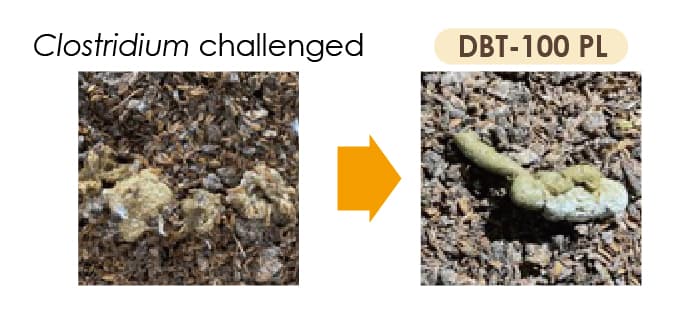 [Figure 6: Comparison of fecal characteristics before and after Clostridium difficile infection]
Application areas
DBT-100 PL is suitable for various poultry feed formulations:
- Broiler feed (suitable for all stages of growth)
- Breeding chicken feed
Particularly suitable for the following aquaculture management scenarios:
- Preventive health management in areas where necrotizing enterocolitis is prevalent
- Farms with high requirements for Salmonella control (export markets, food safety certification)
- Supporting programs for antibiotic-free feeding or antibiotic reduction strategies
- breeding environment with serious wet manure problem
Recommended dosage
| Species | Recommended addition amount |
| Broilers/Breeding Chickens | 150–250 g/metric ton of feed |
Product Specifications
| project | illustrate |
| probiotic strains | Bacillus subtilis BA309 |
| Probiotic count | ≥10⁹ colony-forming units/gram |
| Functional ingredients | Lactic acid bacteria postbiotic L022 |
| thermal stability | Tolerate 120°C |
| Package | 25 kg/bag |
| Minimum shipment quantity | 1 ton |
| Shelf life | 24 months |
| Countries that have already exported | India/Vietnam/Malaysia |
Frequently Asked Questions (Q&A)
Q1: What is the DBT-100 PL? How is it different from other products in the same series, such as the DBT-100 LS and DBT-100 SW?
DBT-100 PL is a dual-benefit probiotic postbiotic feed additive designed by DaBomb Protein Biotech Corp. specifically for broilers and poultry. Its core feature is the use of Bacillus subtilis BA309—a strain optimized for the intestinal environment of poultry. This strain exhibits superior colonization and antibacterial performance in the chicken digestive tract compared to general strains, unlike the BA207 used in DBT-100 LS (widely used in pigs and poultry) and DBT-100 SW (for piglets). Furthermore, DBT-100 PL's experimental data covers important issues specific to poultry: necrotic enteritis prevention, villous height restoration, Salmonella food safety management, and wet feces improvement. It is a solution specifically designed to address the challenges of poultry production.
Q2: Is DBT-100 PL effective for necrotizing enterocolitis? What are the data?
Yes, and there is complete experimental data to support this. The experiment used broilers artificially infected with Clostridium difficile (the pathogen of necrotizing enteritis) as subjects, and measured two indicators: ileal necrosis lesion score and intestinal villus height. In terms of ileal necrosis lesion score, there was no statistically significant difference between the DBT-100 PL group (1.43/1.38) and the healthy control group (1.25/1.31), but it was much better than the unprotected infection group (2.19/2.44). In terms of intestinal villus height, the DBT-100 PL group was also close to the level of the healthy control group, showing that even under the challenge of infection, the integrity of the intestinal absorptive structure was effectively protected.
Q3: Can DBT-100 PL really reduce Salmonella by 92% within two weeks? Is this lab data or field results?
These are the results of a field trial at a poultry farm (not a laboratory-contaminated environment), thus more closely reflecting performance under real-world farming conditions. Trial records show that the Salmonella isolation rate in the chicken flock before the introduction of DBT-100 PL was approximately 46%; two weeks after introduction, it rapidly decreased to 3.3%, a reduction of 92%, and remained at a low level in weeks 3 and 4 without rebounding. This field data provides strong practical evidence for poultry farmers in export markets with Salmonella regulations or downstream slaughterhouses with food safety inspection standards.
Q4: What is the "wet feces" problem? How does DBT-100 PL improve it?
"Wet manure" refers to the watery, runny droppings of chickens that are mixed with bedding due to intestinal infection or gut microbiota imbalance leading to decreased water absorption. For poultry farmers, wet manure is not just a hygiene issue, but a chain reaction affecting production: damp bedding accelerates the proliferation of pathogens, causing contact lesions such as foot lesions and breast sac inflammation in chickens, ultimately impacting carcass quality and market grade. The metabiotic L022 in DBT-100 PL can reduce intestinal inflammation and stabilize the gut microbiota. Experiments show that under Clostridium perfringens infection challenges, the droppings of chickens treated with DBT-100 PL were significantly better than those in the unprotected group, with formed droppings that were clearly separated from the bedding.
Q5: How effective is DBT-100 PL in improving feed conversion ratio? Does it actually help with farming costs?
Under normal feeding conditions (added directly to feed), DBT-100 PL can improve the feed conversion ratio of broilers from 1.33 to 1.22, an improvement of approximately 8.3%. Under Clostridium difficile infection challenge, the feed conversion ratio of the added group (1.59) was also significantly better than that of the unprotected group (1.75). Based on a cost of US$550 per metric ton of feed, normal addition can save US$45 per metric ton of chicken meat, and the savings increase to US$50 under infection challenge conditions, providing farmers with a direct reference for return on investment.
Q6: Can DBT-100 PL be used as a complementary solution for antibiotic-free poultry farming?
Yes. DBT-100 PL is a functional feed additive, antibiotic-free, and positioned as a preventative intestinal health management tool. It directly inhibits Clostridium and Salmonella through the BA309 probiotic, and regulates intestinal immunity with the postbiotic L022, effectively filling the health management gap after the removal of preventative antibiotics. Field trials showing a 92% reduction in Salmonella pressure and results from necrotizing enterocolitis protection trials provide strong scientific evidence for its effectiveness in antibiotic-free feeding strategies.
Q7: Will DBT-100 PL maintain its effectiveness after high-temperature feed pelleting?
Yes. DBT-100 PL uses spore-forming Bacillus subtilis BA309. Its spore structure gives it exceptional heat resistance, allowing it to withstand feed pelleting processes at 120°C while maintaining a sufficient number of viable bacteria to effectively colonize the gut. The metabiotic L022 is a lactic acid bacteria metabolite, inherently heat-stable and unaffected by high-temperature processes. This allows DBT-100 PL to be directly integrated into commercial poultry feed production processes without requiring special post-coating processes or low-temperature mixing equipment.
Q8: In which aquaculture management scenarios is DBT-100 PL suitable for implementation?
DBT-100 PL delivers its most significant benefits in the following situations:
- Necrotic enteritis is common in farms with high-density broiler farming, high-energy and high-protein feed formulations, or farms with a history of necrotizing enteritis outbreaks. Preventive continuous supplementation is recommended.
- For businesses with high Salmonella management needs, such as those exporting chicken that must meet Salmonella limits in specific markets (e.g., the EU, Japan) or downstream slaughterhouses that require food safety inspections, implementing DBT-100 PL can serve as a proactive management tool to reduce Salmonella contamination on-site.
- Antibiotic-free or reduced antibiotic feeding transition period: During the transition from antibiotic-containing feed to antibiotic-free feed, the gut microbiota is still being rebuilt. Supplementing with DBT-100 PL can help stabilize the microbiota and reduce the risk of intestinal diseases in the early stages of the transition.
- Chicken houses with severe wet manure problems: Persistent wet manure problems often reflect an imbalance in the intestinal flora. Introducing DBT-100 PL can fundamentally improve the intestinal environment and simultaneously solve problems related to fecal characteristics and chicken house hygiene.
For product samples, feed formulation consultation, or technical support, please contact DaBomb Protein Biotech Corp.